Calving begins
January: Southern Serengeti & Ndutu
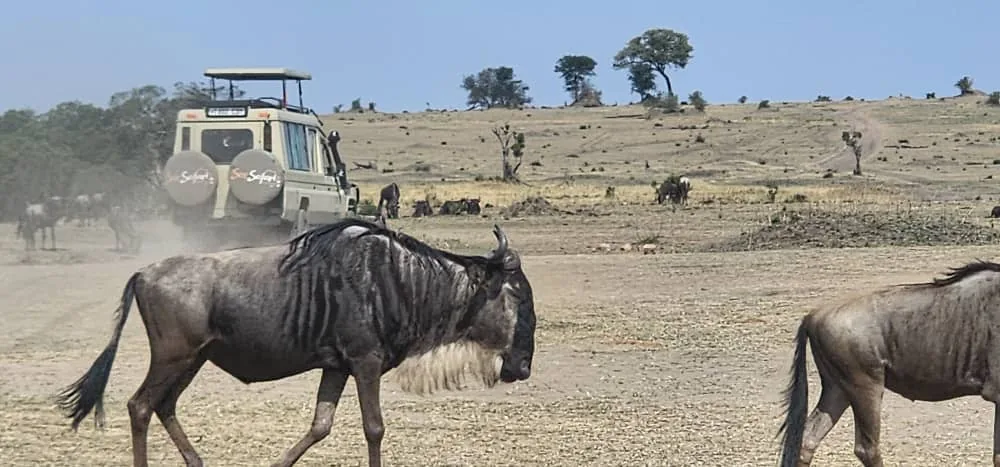
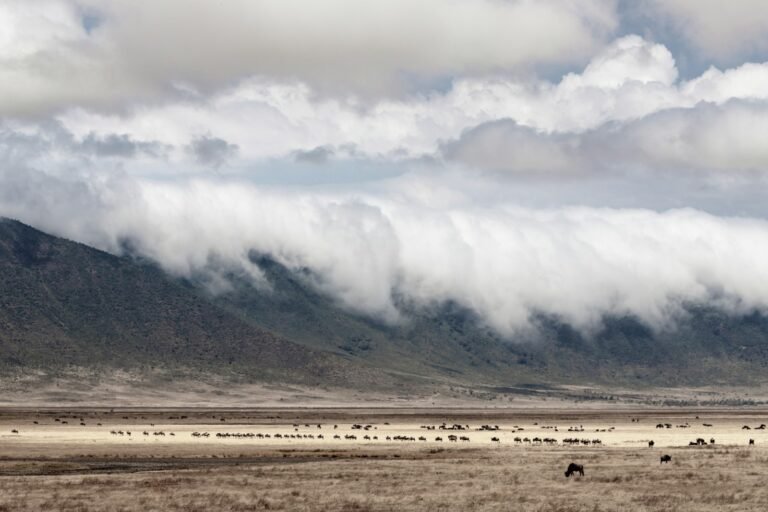
The herds have settled on the short-grass plains of the southern Serengeti and the Ndutu area of the Ngorongoro Conservation Area. The grass is rich after the short rains, and the first wildebeest calves arrive towards the end of the month.
Our tip: Base yourself near Ndutu or in a southern Serengeti seasonal camp. Pair it with a Ngorongoro Crater day.
Plan a January migration safari
Peak calving
February: Southern Serengeti & Ndutu
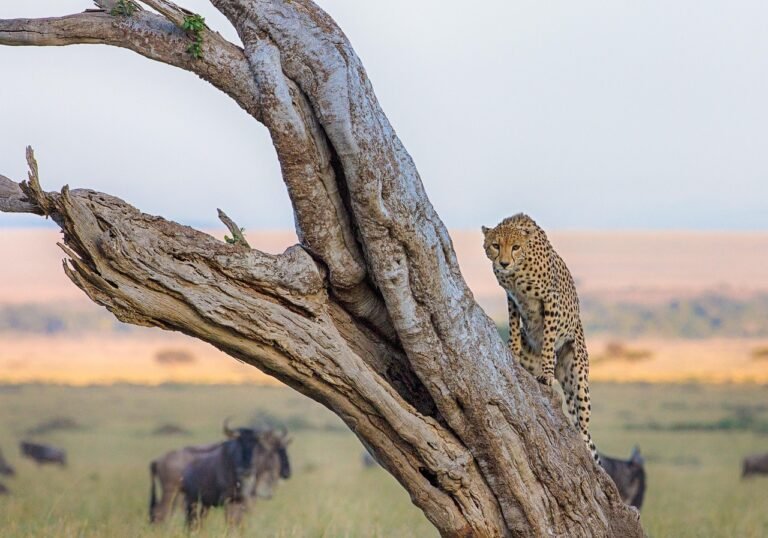
Calving season peaks: thousands of calves are born every day over two to three weeks. Lions, cheetahs and hyenas stay close to the herds, so predator sightings are at their most dramatic.
Our tip: February is one of the best months of the year. Book southern camps early, they fill fast.
Plan a February migration safari
Young calves
March: Southern plains & Ndutu
The calves are growing stronger and the herds are still spread across the southern plains. As the long rains approach and the plains start to dry, the wildebeest begin to gather into larger groups.
Our tip: Lower green-season rates often start now, with excellent wildlife and fewer vehicles.
Plan a March migration safari
Moving north-west
April: Moru Kopjes & Central Serengeti
With the long rains, the herds start moving north-west from the southern plains past the Moru Kopjes towards the central Serengeti. The landscape is lush and green.
Our tip: Quietest month of the year. Some camps close, so ask us which ones are open for your dates.
Plan a April migration safari
Long columns & rut
May: Central Serengeti to the Western Corridor
Long columns of wildebeest and zebra, sometimes stretching for kilometres, move through the Seronera area towards the Western Corridor. The mating season (rut) begins.
Our tip: Seronera in the central Serengeti is a great base, with year-round resident predators.
Plan a May migration safari
Grumeti crossings
June: Western Corridor & Grumeti River
The herds gather in the Western Corridor and face the Grumeti River, where large crocodiles wait. The rut is in full swing, and the leading groups start pushing north.
Our tip: Stay in the Western Corridor or Grumeti area for the first river crossings of the year.
Plan a June migration safari
First Mara crossings
July: Western Corridor to Northern Serengeti
The migration moves into the northern Serengeti. Depending on the rains, the first Mara River crossings can start from mid to late July, and the herds begin arriving in Kenya's Masai Mara.
Our tip: Combine the central and northern Serengeti to follow the herds as they move.
Plan a July migration safari
Mara River crossings
August: Northern Serengeti & Masai Mara
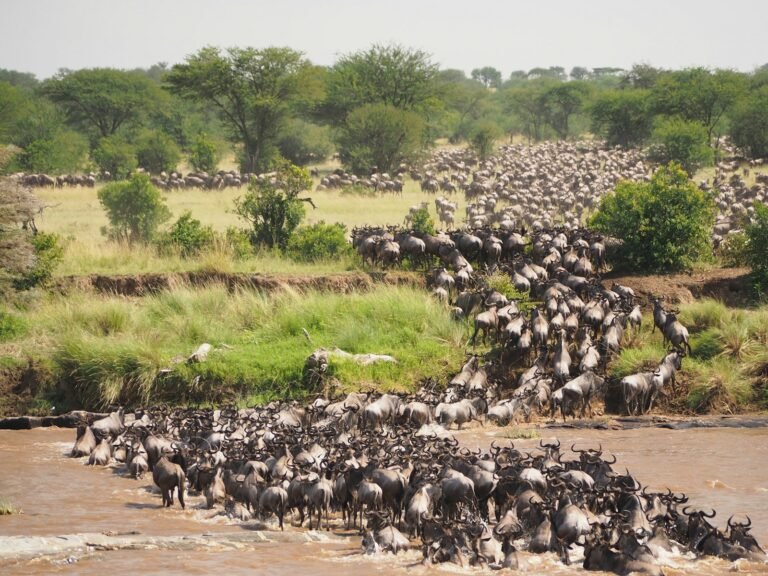
Peak river-crossing season. The herds move back and forth across the Mara River between the northern Serengeti (Kogatende and Lamai) and the Masai Mara in Kenya.
Our tip: The most popular month. Book 6 to 12 months ahead for camps close to the river.
Plan a August migration safari
Crossings continue
September: Northern Serengeti & Masai Mara
River crossings continue in both directions. Herds are spread between the northern Serengeti and the Masai Mara, with big cats following them closely.
Our tip: Slightly fewer visitors than August, with the same chance of crossings.
Plan a September migration safari
Turning south
October: Masai Mara & Northern Serengeti
As the short rains approach, the herds start leaving the Masai Mara and heading south through the northern Serengeti. Late crossings are still possible.
Our tip: Good value in the north before the short rains, with occasional river crossings.
Plan a October migration safari
Heading south
November: Eastern & Central Serengeti
With the short rains, the herds move quickly south through the Lobo area and the eastern Serengeti towards Seronera and the southern plains.
Our tip: The herds move fast this month. A flexible route through the central Serengeti works best.
Plan a November migration safari
Back on the plains
December: Southern Serengeti & Ndutu
The herds arrive back on the fresh green grass of the southern Serengeti and Ndutu, where they will stay for the calving season. The cycle starts again.
Our tip: A great time for a festive-season safari. Book early for Christmas and New Year dates.
Plan a December migration safari