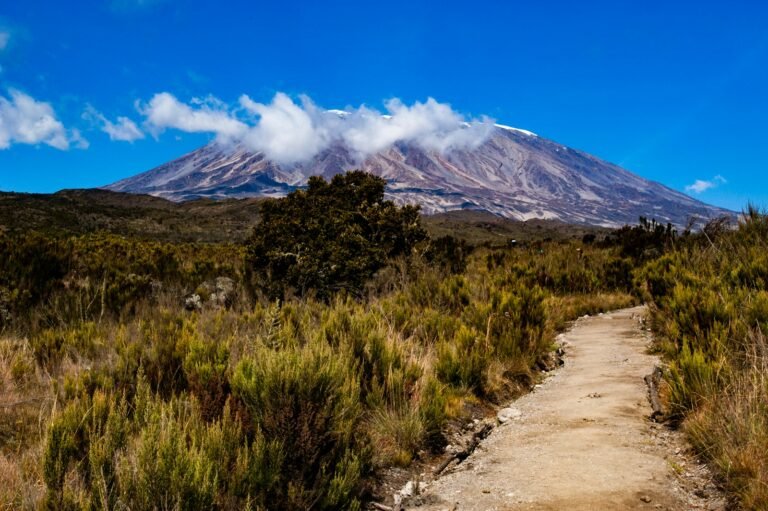
Trekkers hiking a trail on Mount Kilimanjaro ★★★★★ Rated 4.9 on Google, Tripadvisor & SafariBookings

Hiking & Trekking: Climb Mount Kilimanjaro

Trek to the Roof of Africa on Mount Kilimanjaro with experienced mountain guides and crews.

Overview

Climb the Roof of Africa

At 5,895 metres, Mount Kilimanjaro is Africa's highest mountain and the world's tallest free-standing mountain. You don't need technical climbing skills to reach Uhuru Peak, just good preparation, the right route and an experienced team. On your way up you'll pass through rainforest, heath and moorland, alpine desert and finally the arctic summit zone, in one unforgettable trek.

Best time to go Jan – Mar & Jun – Oct
Trips available 2 safaris
Travel style Private & tailor-made

Our Kilimanjaro routes

6-Day Kilimanjaro Marangu Route Climb

The Marangu route is the only route with shared mountain huts instead of tents. Our 6-day itinerary includes an acclimatisation day at Horombo before the summit attempt, which improves your chance of reaching the top. Best for: trekkers who prefer a bed in a hut to camping, or who have less time.

8-Day Kilimanjaro Lemosho Route Climb

Lemosho starts in the quiet western rainforest, crosses the beautiful Shira Plateau, and makes its summit attempt from Barafu Camp before descending via Mweka. Eight days gives your body more time to adjust to the altitude. Best for: trekkers who want the best scenery, fewer crowds and the highest summit success rate.

Why trek Kilimanjaro with us

  • Experienced mountain crews. Guides, porters and cooks who climb the mountain regularly.
  • Acclimatisation built in. Our itineraries include extra days to help your body adjust to the altitude.
  • Local and on the ground in Arusha. Pre-climb briefings, gear checks and transfers are all handled locally.
  • Easy to add a safari. Recover with a Serengeti and Ngorongoro safari or relax on a Zanzibar beach.

Best time to climb Kilimanjaro

  • January to early March: generally clear and a little warmer, a great window for the summit.
  • June to October: the main dry season and the most popular time to climb. It's colder at night but usually stable.
  • April to May and November: the rainy seasons. Trails are quieter but wetter, and the Marangu huts can be a good option.

How to prepare

  1. Train with long walks and hikes for a few months before your trip, ideally with a loaded daypack.
  2. Choose a longer itinerary if you can. More days on the mountain means better acclimatisation.
  3. Walk "pole pole" (slowly, slowly), drink plenty of water and listen to your guide.
  4. Pack in layers. Temperatures range from tropical at the gate to well below freezing at the summit.
  5. Get travel insurance that covers high-altitude trekking up to 6,000 m.

Good to know

Frequently asked questions

How difficult is it to climb Kilimanjaro?

Kilimanjaro is a non-technical trek, so no ropes or climbing experience are needed. The main challenge is the altitude. Summit night is long and cold. With good fitness, a sensible pace and enough acclimatisation days, most healthy adults can reach the top.

Which Kilimanjaro route is best?

For scenery and success rates, Lemosho is one of the best routes. For hut accommodation and a shorter trip, Marangu is a good choice. We'll help you choose based on your fitness, budget and time.

How many days does it take to climb Kilimanjaro?

Most climbs take 6 to 9 days in total. We offer a 6-day Marangu climb and an 8-day Lemosho climb. Longer itineraries give better acclimatisation and a higher chance of summiting.

Is there a minimum age to climb Kilimanjaro?

Kilimanjaro National Park sets a minimum age of 10 for summit climbs. Younger children can do lower-altitude day hikes.

Can I combine Kilimanjaro with a safari?

Yes, and it's a very popular combination. After your descent, a 2 to 4 day Northern Circuit safari to the Serengeti and Ngorongoro is the perfect reward. See our wildlife safaris.

Itineraries

Hiking & Trekking