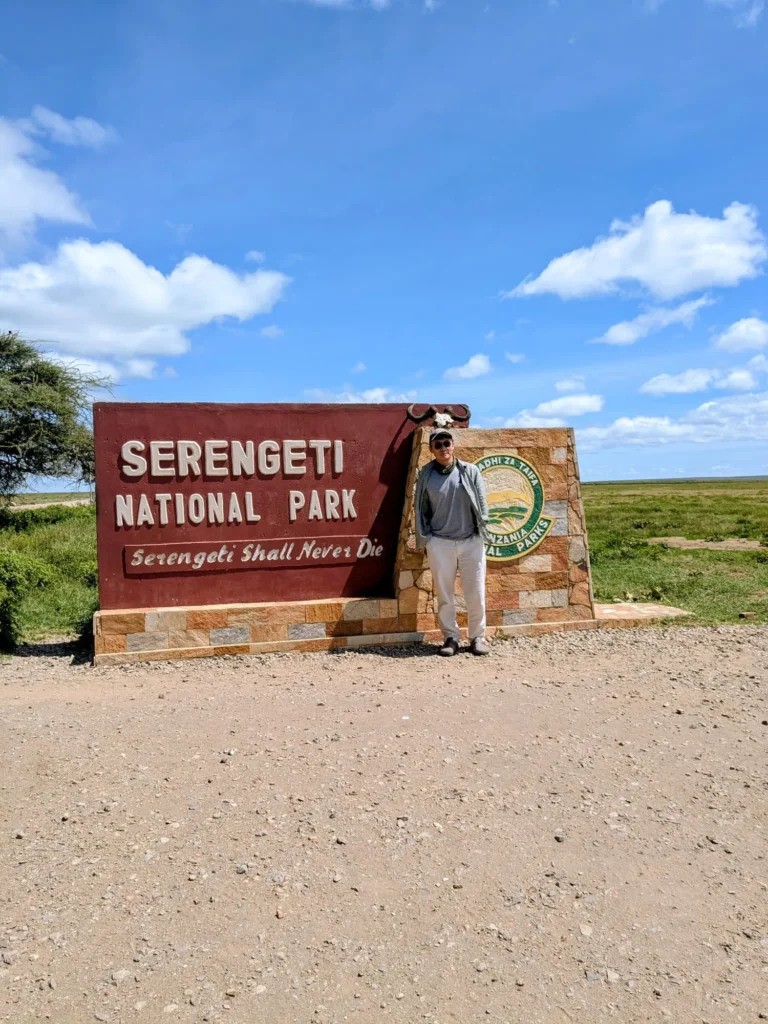
Serengeti National Park at a glance
- Where
- Northern Tanzania, on the border with Kenya’s Masai Mara
- Size
- 14,763 km², about half the size of Belgium
- Protected
- National park since 1951, UNESCO World Heritage Site since 1981
- Known for
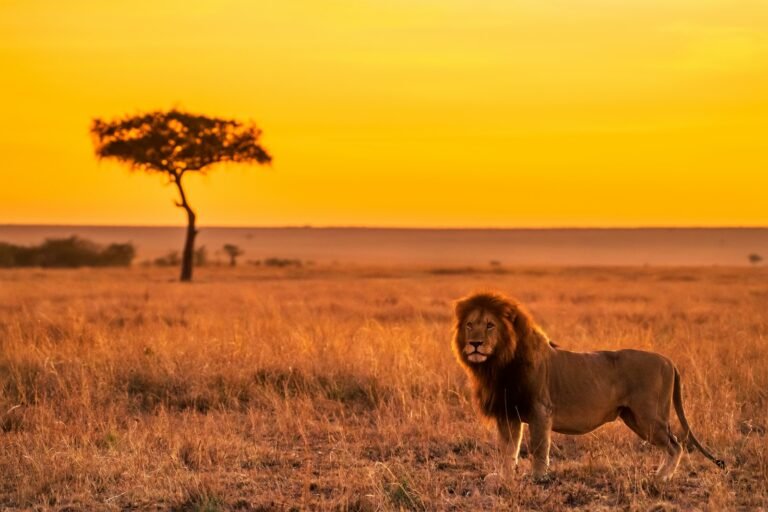
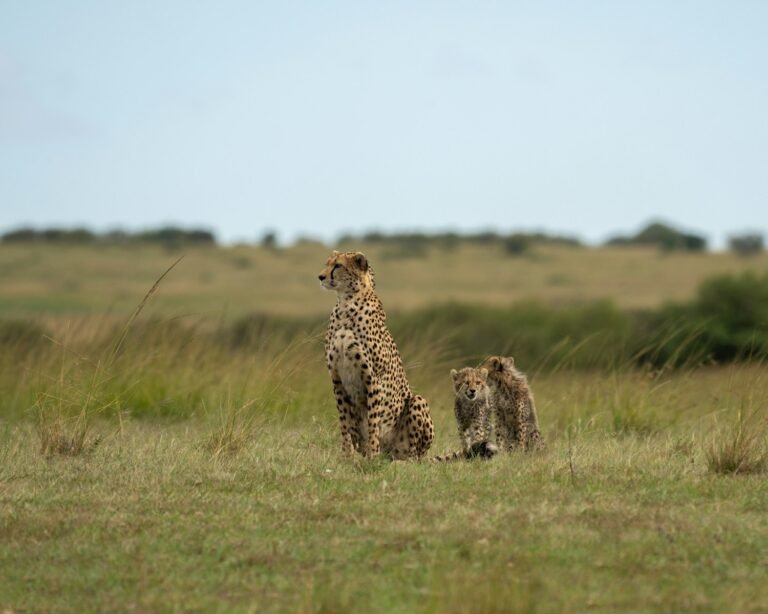
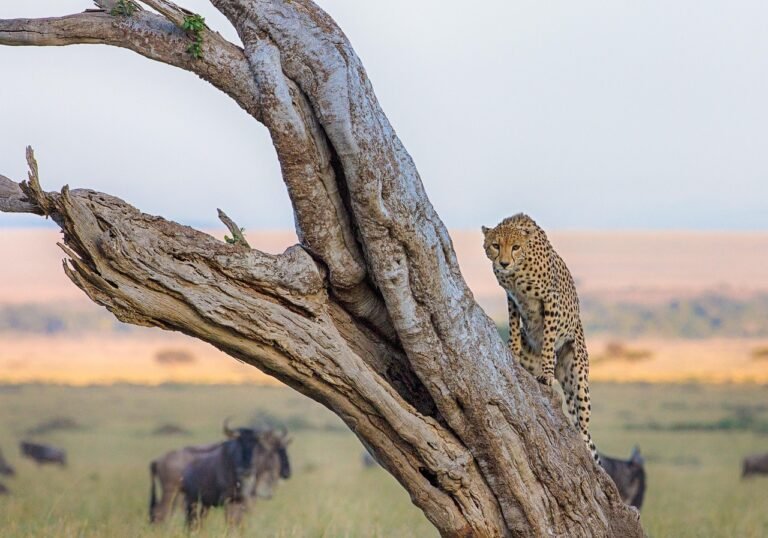
- The Great Migration, lions, cheetahs and leopards
- Best months
- June to October, and January to February
- From Arusha
- 7 to 8 hours by road, or about 1 hour by light aircraft
- Ideal stay
- 3 to 4 nights
- Pairs with
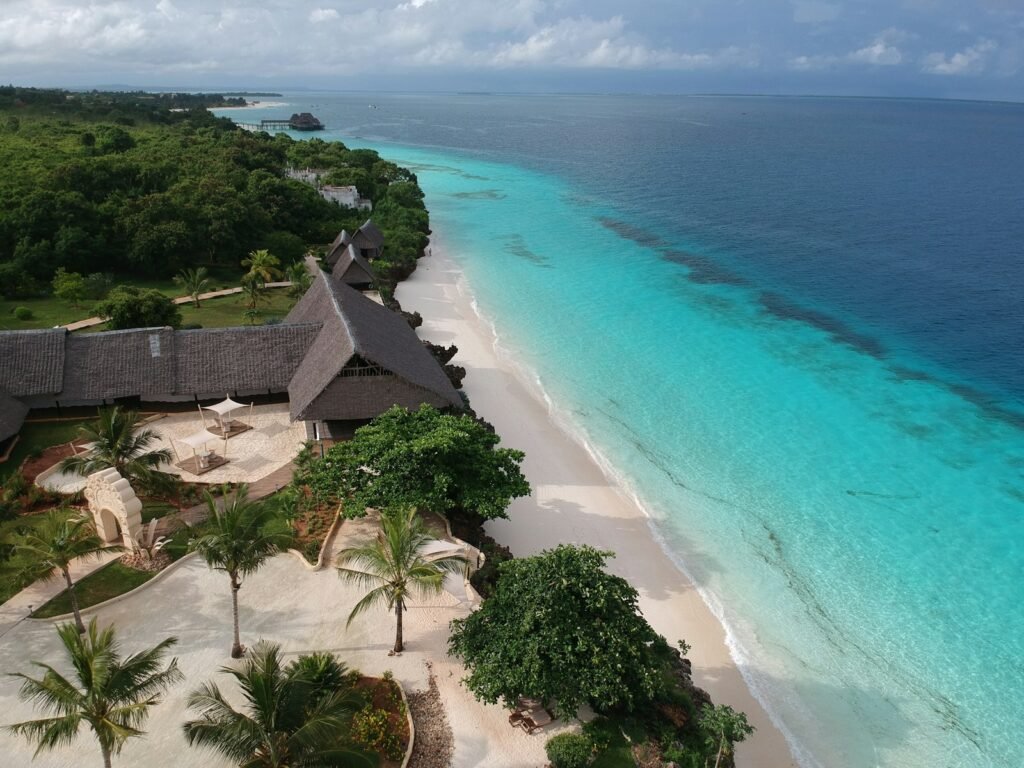
- Ngorongoro, Tarangire, Zanzibar
The name comes from the Maasai word siringet, often translated as “the place where the land runs on forever”. Stand on a kopje at sunrise and you will see why.
The Great Migration, month by month
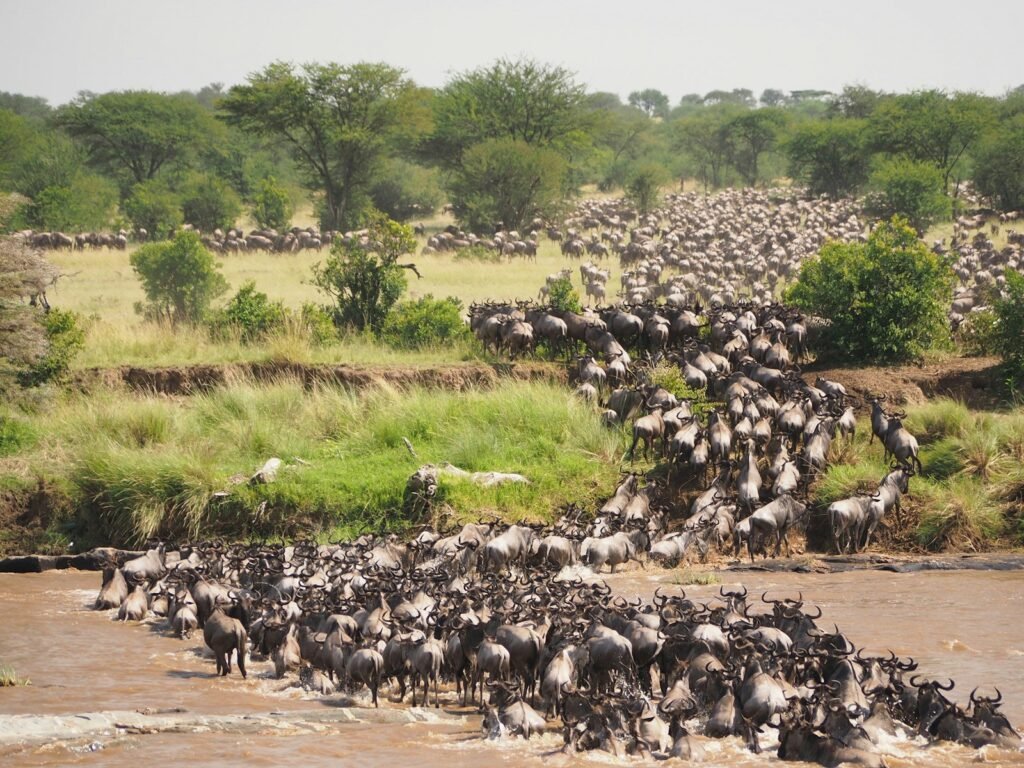
The migration is not a single event. It is a loop that never stops, as the herds follow the rain and fresh grass around the Serengeti and into Kenya’s Masai Mara.
“The Serengeti plains harbour the largest remaining unaltered animal migration in the world where over one million wildebeest plus hundreds of thousands of other ungulates engage in a 1,000 km long annual circular trek spanning the two adjacent countries of Kenya and Tanzania.”
- Southern plains and NdutuDecember to March. Short grass, calving season.
- Central SerengetiApril, May and November. Herds on the move.
- Western CorridorJune and July. Grumeti River crossings.
- Northern SerengetiAugust to October. Mara River crossings.
| Months | Where the herds are | What you see |
|---|---|---|
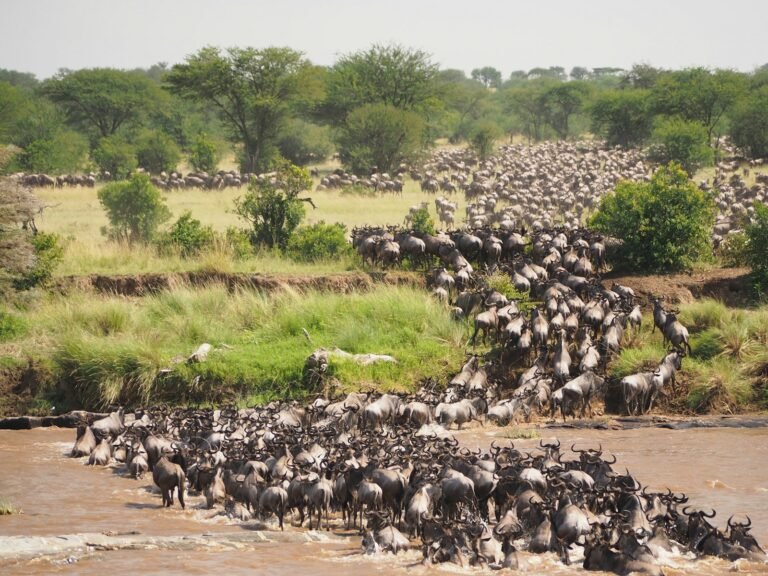
| December to March | Southern plains and Ndutu | Huge herds on short grass. Most calves are born in late January and February, and big cats stay close. |
| April to May | Central Serengeti, heading north-west | Long columns on the move during the long rains. Green scenery and very few vehicles. |
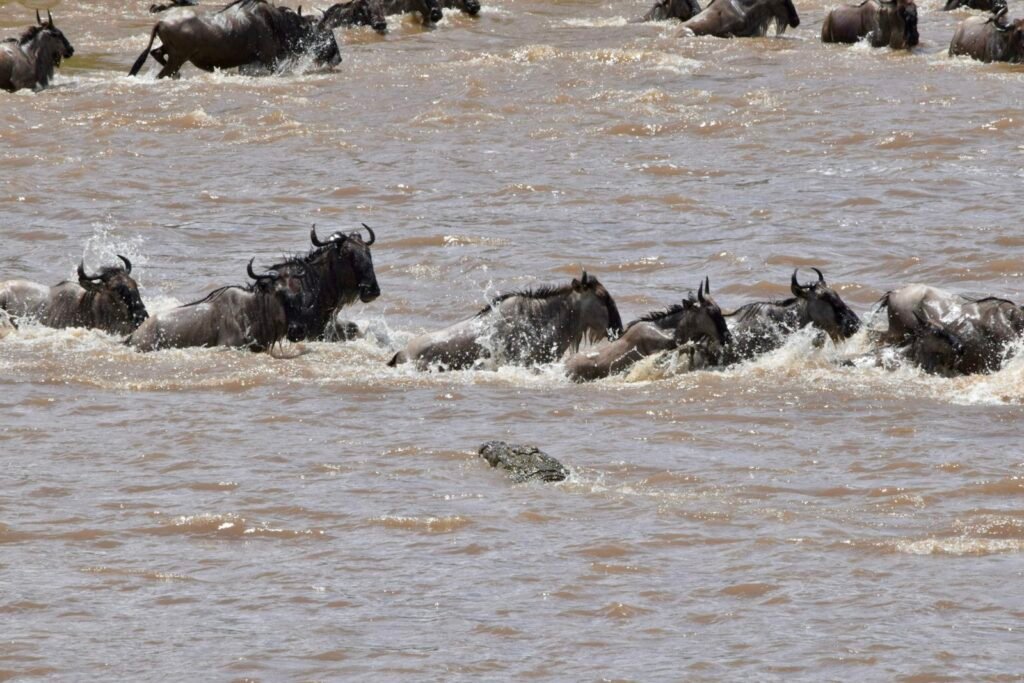
| June to July | Western Corridor | The first river crossings, at the Grumeti River, where large crocodiles wait. |
| August to October | Northern Serengeti | Mara River crossings. The herds move back and forth between Tanzania and Kenya. |
| November | Eastern and central Serengeti | The short rains pull the herds south again, towards the calving grounds. |
Timing follows Encyclopaedia Britannica’s account of the migration and what our guides see on the ground each season. Planning a trip across the border too? Read how to combine Kenya and Tanzania.
Where to go: the four regions of the Serengeti
The park is larger than many countries, so where you stay matters as much as when you come. We choose your camps to match the season.
Seronera and the centre
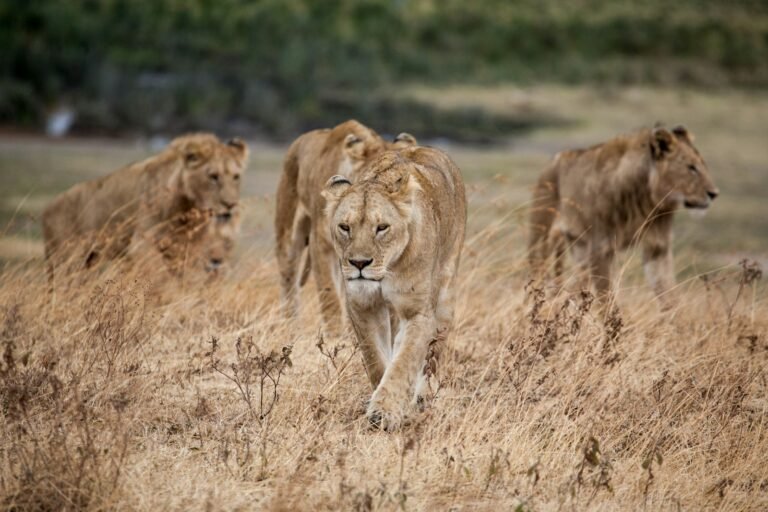
The Seronera River holds water all year, so lions, leopards and cheetahs stay too. This is the best base for a first safari and for short trips.
Southern plains and Ndutu
Flat, open short-grass country that fills with wildebeest in calving season. Cheetahs love this terrain.
Western Corridor
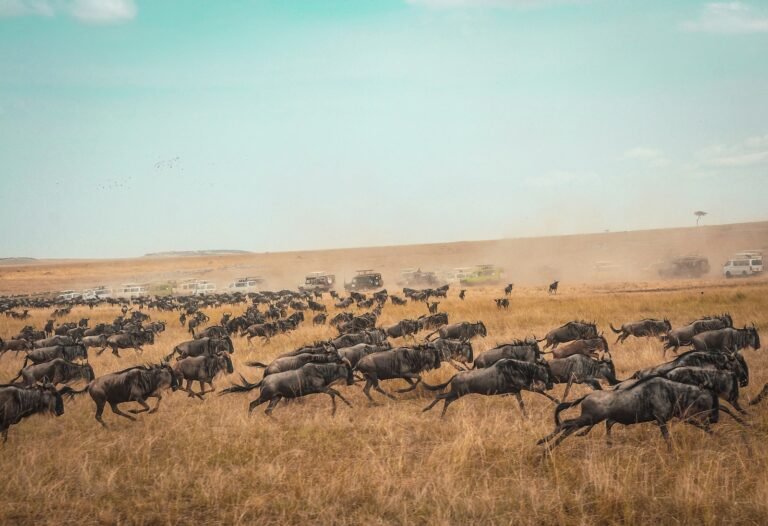
Woodland and floodplain along the Grumeti River. Quieter than the centre, with the first crossings of the year.
Northern Serengeti
Rolling hills, the Mara River and far fewer vehicles. It is a long drive, so we often fly guests in or allow extra nights.
Wildlife beyond the migration
The herds get the headlines, but the resident animals make the Serengeti a year-round park. UNESCO lists these numbers for the park’s predators and birds.
- 4,000lions
- 3,500spotted hyenas
- 1,000leopards
- 225cheetahs
- 500+bird species
Source: UNESCO World Heritage Centre, Serengeti National Park.
Your chances on a 3 to 4 night safari
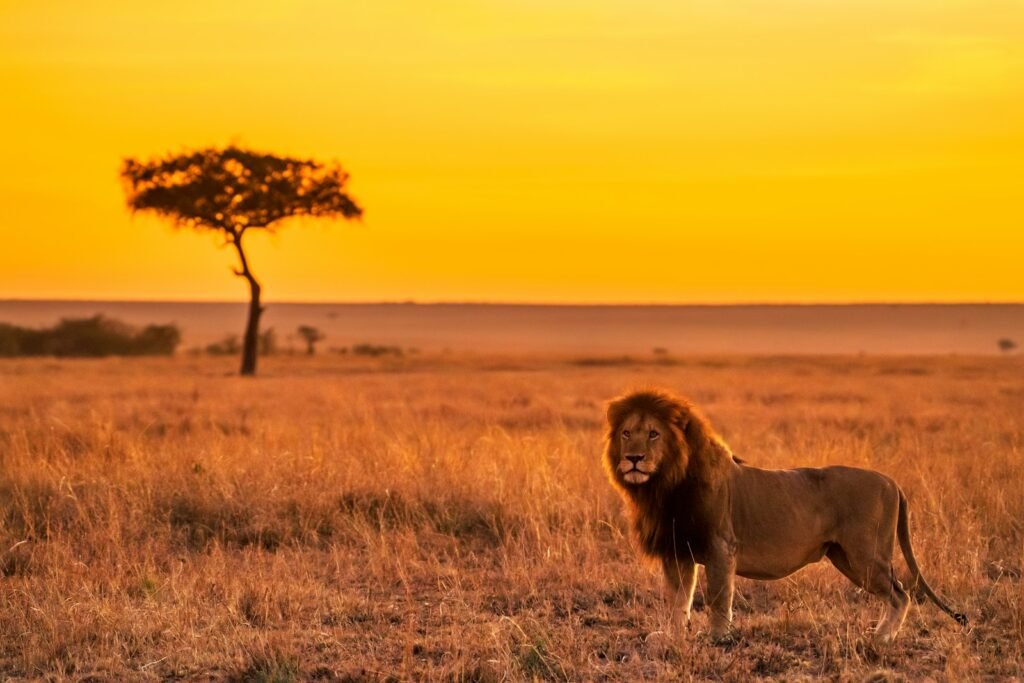
- LionAlmost certain. Prides rest on the kopjes around Seronera.
- Elephant and buffaloAlmost certain. Common in the centre and the north.
- CheetahVery likely. Best on the open southern and eastern plains.
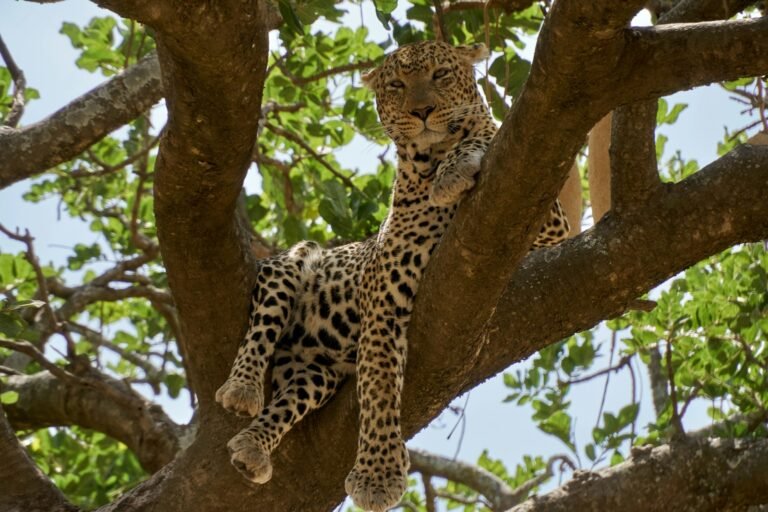
- LeopardLikely. Look up into the sausage trees along the Seronera River.
- Black rhinoRare. A small, shy population. Ngorongoro gives you a better chance.
These ratings are our guides’ own experience, not a guarantee. Wild animals do not follow a schedule.
Best time to visit the Serengeti
There is no closed season. Choose your month by what you most want to see.
- JanCalves
- FebCalves
- MarGood
- AprRains
- MayRains
- JunDry
- JulDry
- AugPeak
- SepPeak
- OctDry
- NovGood
- DecGood
- June to October, the dry season. Thin grass, animals near water, river crossings from July. This is also the busiest and most expensive time, so book early.
- January and February, calving season. Newborn wildebeest on the southern plains and a lot of predator action. Warm days with the odd shower.
- April and May, the long rains. Lush, quiet and good value. Some tracks get muddy and a few camps close.
- November and December, the short rains. Showers pass quickly, the plains turn green and the herds head south.
Getting there and how long to stay
Most of our safaris start in Arusha. The drive to the central Serengeti takes 7 to 8 hours, so we break it with a night at Tarangire, Lake Manyara or the Ngorongoro Crater on the way.
Short on time? Daily light-aircraft flights link Arusha with the Seronera, Kogatende and Ndutu airstrips in about an hour.
- 2 nights is the minimum for a real look at the centre.
- 3 to 4 nights lets you follow the migration into a second region.
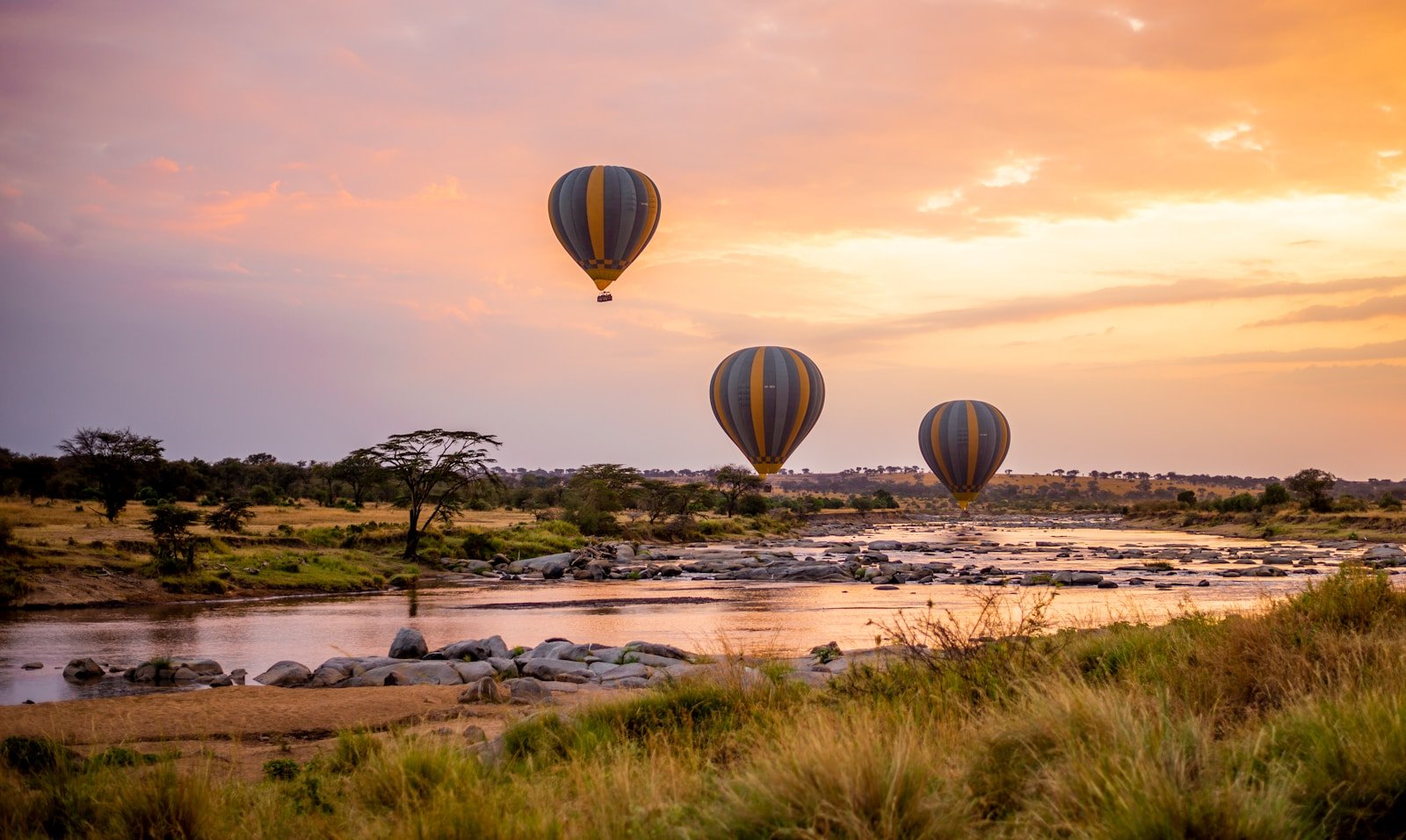
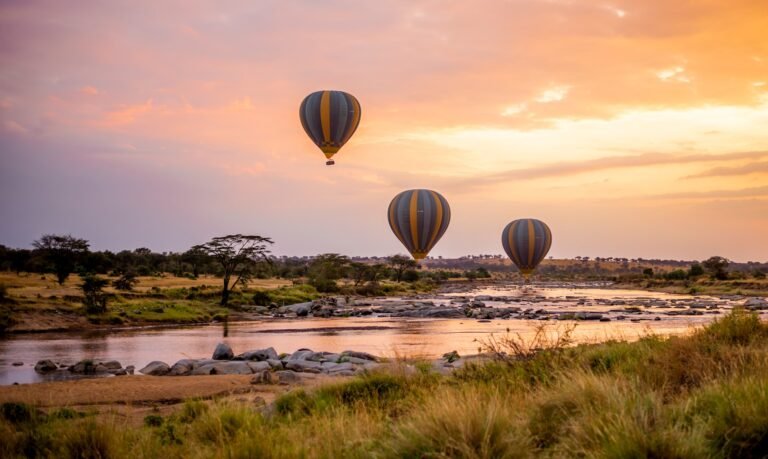
- Add a balloon flight at dawn if you want the view from above.
Serengeti safaris with See Safari Adventure
We are a licensed safari company based in Arusha. Every Serengeti trip is private: your own 4×4 with a pop-up roof, your own guide, and a route we adjust to where the herds are that week.
- 3daysSerengeti and Ngorongoro SafariPrice on request
- 5daysSerengeti Great Migration SafariPrice on request
- 5daysNorthern Circuit Mid-Range SafariFrom US$2,250 pp
- 7daysNorthern Circuit Explorer SafariFrom US$3,150 pp
- 8daysKenya and Tanzania: Masai Mara to SerengetiFrom US$3,800 pp
Not sure which one fits? Tell us your dates and we will reply within one working day with a route built around the migration.
Sources
- UNESCO World Heritage Centre: Serengeti National Park. Migration description, predator and bird numbers.
- Encyclopaedia Britannica: Serengeti National Park. Park size, founding year and seasonal herd movements.
- Tanzania National Parks (TANAPA): About Serengeti. Park history.
Travel times, seasons and sighting chances come from our own guides. Last reviewed November 2026.