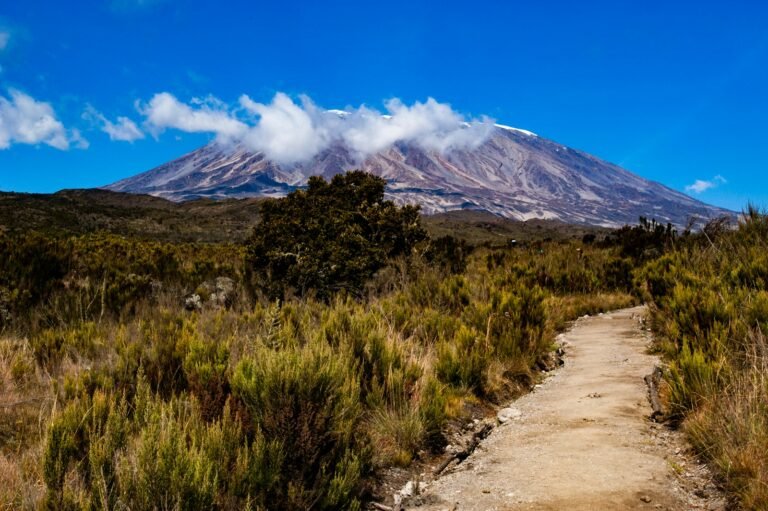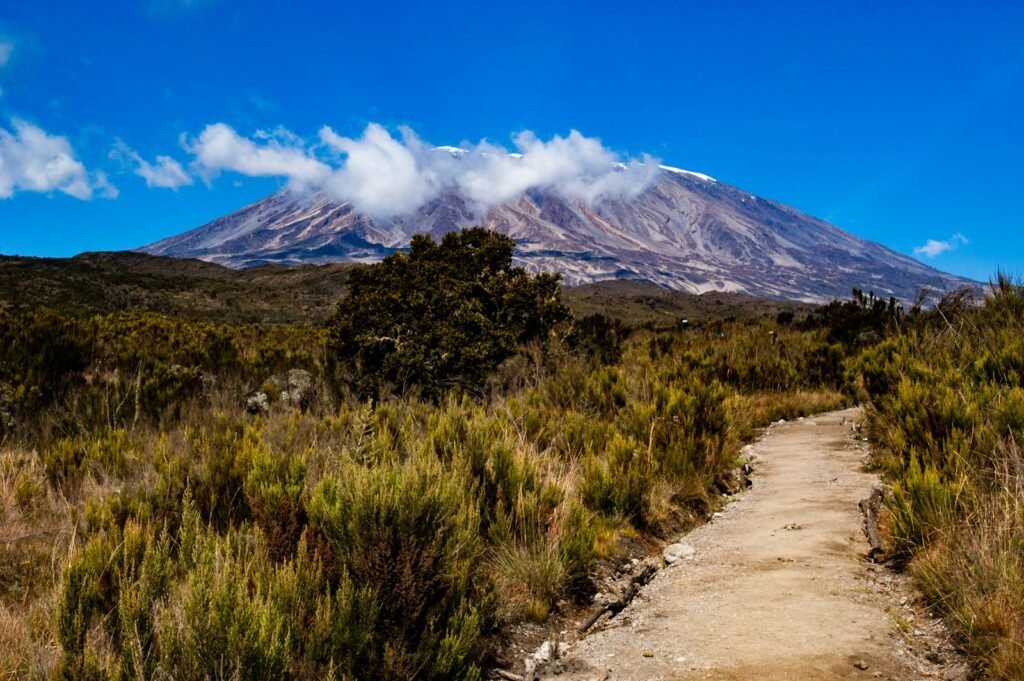

What makes Kilimanjaro hard?
Most days on the mountain involve 4 to 7 hours of steady walking on good trails. That part feels like a long hiking holiday.
The difficulty comes from thin air, cold nights and one very long summit day. Fitness helps, but how well your body adapts to altitude matters more.
What summit night is really like
You start around midnight from the high camp, climbing by headtorch in temperatures that can fall well below freezing. The aim is to reach the crater rim around sunrise.
- Midnight: wake, warm drink and a slow start from high camp.
- Night climb: 6 to 7 hours of steep, zig-zagging ascent at a very slow pace.
- Sunrise: reach the crater rim at Stella Point or Gilman’s Point.
- Uhuru Peak: another hour or so along the rim to the summit sign.
- Descent: back down to camp and lower again to sleep, often 6 or more hours.

Route choice and difficulty
The route you choose changes your chance of success more than anything else. Longer routes give your body more time to adapt.
Marangu route
- 5 to 6 days, the only route with huts
- Gentle gradients, a well-made path
- Less time to acclimatise, so pace matters
- Steep final climb from Kibo Hut
Lemosho route
- 7 to 8 days, camping
- Climb high, sleep low profile
- Higher success rates and fewer crowds
- Beautiful western approach
Operators widely report better summit rates on 7 and 8-day routes than on 5 and 6-day climbs. If you can spare the extra days, take them.
Considering huts instead of tents? Read our Marangu route guide.
Altitude sickness on Kilimanjaro
Almost everyone feels the altitude a little, with headaches, poor sleep or low appetite. These mild symptoms often ease as you adapt.
- Walk slowly: “pole pole”, or slowly slowly, is the rule every guide repeats.
- Drink 3 to 4 litres a day: water and warm drinks help you adapt.
- Eat even when not hungry: your body needs energy to climb.
- Speak up early: tell your guide about symptoms. Our climbs include guide-led health checks and emergency oxygen.
- Descend if it gets worse: going down is the treatment for serious altitude sickness.
Talk to your doctor before you go, especially about medication that can help with acclimatisation.
How to train for Kilimanjaro
Start 8 to 12 weeks before your climb. Focus on long walks rather than speed.
| Weeks before | Focus |
|---|---|
| 12 to 9 | Walk 3 times a week, building to 2-hour hikes |
| 8 to 5 | Add hills or stairs and one long weekend hike of 4 to 6 hours |
| 4 to 2 | Back-to-back long hikes with a loaded daypack, in your boots |
| Final week | Rest, sleep well and keep walking lightly |
Our Kilimanjaro climbs
Both climbs start from Moshi at the foot of the mountain. They include park fees, licensed guides, cook and porters, meals on the trail, emergency oxygen and guide-led health monitoring.
Many climbers add a short safari after the summit. Read about Kilimanjaro views from Kenya in our Amboseli National Park guide, or see the Mount Kilimanjaro destination page.
Common questions
Can a beginner climb Kilimanjaro?
Yes. You do not need climbing experience, but you should be a regular walker and train for 8 to 12 weeks beforehand.
What is the hardest part of Kilimanjaro?
Summit night. It starts around midnight, is very cold and steep, and comes at the highest altitude of the climb.
Which Kilimanjaro route is easiest?
Marangu has the gentlest path and huts, but its short schedule makes acclimatisation harder. Longer routes like Lemosho are easier on your body.
How much does Kilimanjaro cost in park fees?
Commonly quoted fees include about US$70 per person per day for conservation, plus nightly hut or camping fees and a one-off rescue fee.
When is the best time to climb Kilimanjaro?
The driest months are January to early March and June to October. These give the best chance of clear views and dry trails.
Talk to us about your climb
Tell us your fitness level and how many days you have. We will recommend the route that gives you the best chance of reaching Uhuru Peak.
Sources and planning notes
Written by the See Safari Adventure team in Arusha, Tanzania. Reviewed November 2026 for 2027 climbs. This guide is general advice, not medical advice.